
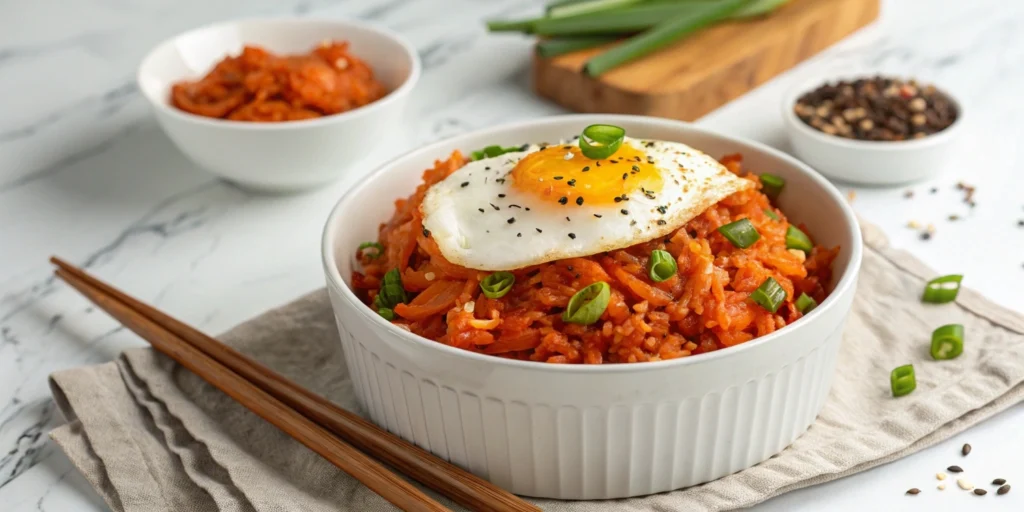
Kimchi fried rice, known as 김치볶음밥 (kimchi bokkeumbap), brings bold flavors and satisfying textures together in just minutes. With its combination of spicy, tangy kimchi and perfectly stir-fried rice, this dish is a staple in Korean households. Beyond its incredible taste, it offers a balanced blend of probiotics, fiber, and protein, making it a wholesome choice for any meal. If you have a bowl of leftover rice and some well-fermented kimchi, you’re already halfway to creating a deeply flavorful dish that’s both simple and nourishing.
Why This 5-Minute Kimchi Fried Rice Stands Out
Unlike many quick meals that sacrifice nutrition for convenience, this dish manages to give you the best of both worlds:
- Fast & Effortless – Ready in under 10 minutes, with minimal chopping and cleanup.
- Balanced Nutrition – Probiotics, fiber, and protein all in one pan.
- Customizable – Whether vegetarian, spicy, or mild, it adapts to your taste.
- Budget-Friendly – Uses leftover rice and common pantry staples, keeping costs low.
- Globally Loved – A Korean comfort dish that has become a favorite worldwide.
Essential Ingredients for the Perfect Kimchi Fried Rice
To create this dish, you’ll need a few pantry staples and fresh ingredients:
- Cooked rice (1 cup) – Day-old rice is best, as it has a firmer texture that won’t turn mushy.
- Kimchi (½ cup) – Chopped into bite-sized pieces. The deeper the fermentation, the bolder the flavor.
- Kimchi juice (1 tablespoon) – Adds richness, tang, and a natural reddish hue.
- Gochujang (1 tablespoon) – Optional, but it deepens the spice with a smoky sweetness.
- Soy sauce (1 tablespoon) – Enhances umami and ties flavors together.
- Sesame oil (1 teaspoon) – A few drops are enough to add nutty aroma.
- Egg (1) – Either fried with a runny yolk or scrambled directly into the rice.
- Protein of choice (½ cup) – Tofu for a vegetarian touch, or bacon, chicken, or shrimp for a meaty boost.
- Scallions (2 stalks) – Chopped fresh for brightness.
- Sesame seeds (1 teaspoon) – For a crunchy finish.
Step-by-Step Guide to Making Kimchi Fried Rice
1. Prepare Your Ingredients
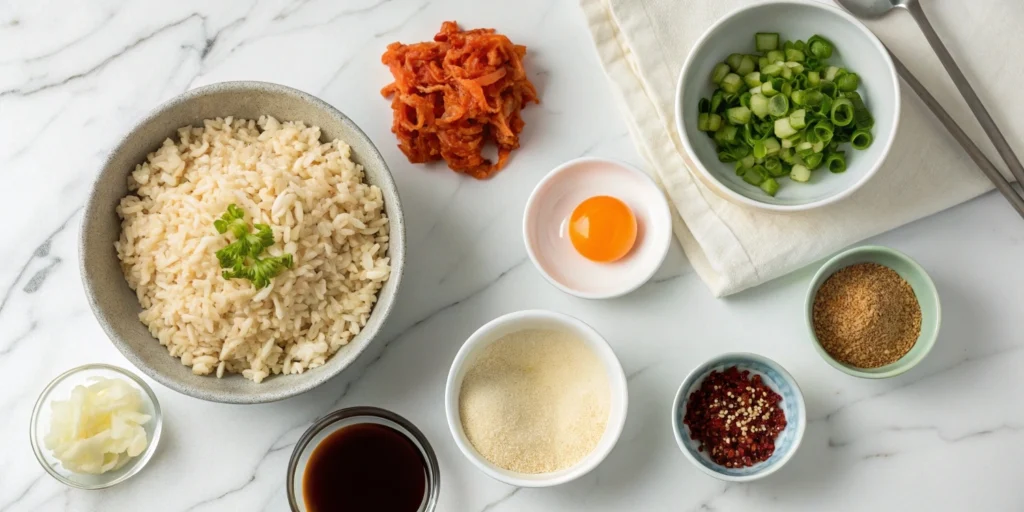
- Chop the kimchi into small pieces, setting aside a tablespoon of kimchi juice.
- If using a protein like chicken or tofu, cut it into bite-sized portions.
- Crack an egg into a bowl if you plan to scramble it.
2. Sauté the Aromatics & Kimchi
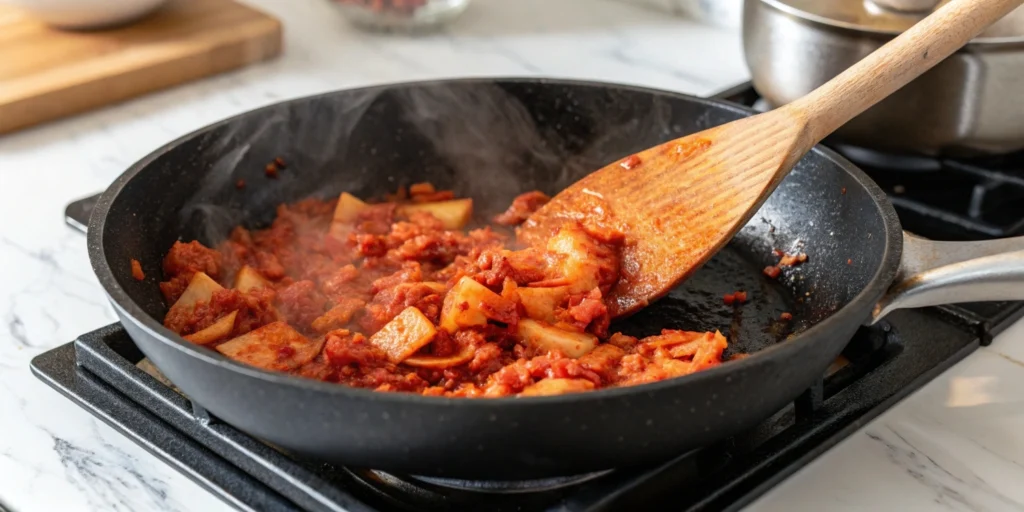
- Heat a pan over medium-high heat and add a teaspoon of sesame oil.
- If using bacon or another meat, cook until slightly crispy, then add the kimchi.
- Stir-fry until the kimchi softens and becomes fragrant, about 2-3 minutes.
3. Stir-Fry the Rice & Seasonings
- Break apart any clumps of rice as you add it to the pan.
- Pour in the soy sauce, gochujang, and reserved kimchi juice.
- Stir constantly to coat the rice evenly, cooking for another 2-3 minutes.
4. Add the Egg & Garnishes
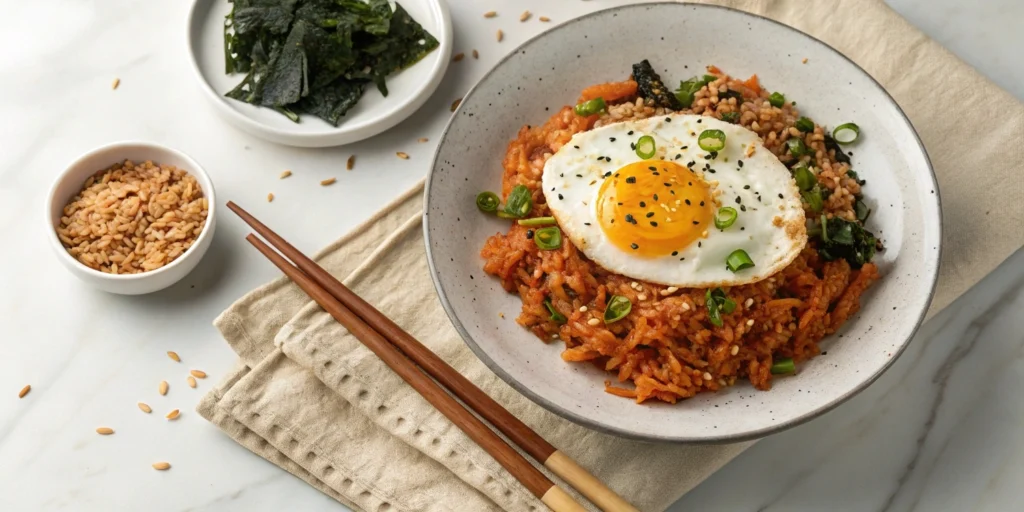
- If frying an egg separately, cook it in another pan until the yolk is runny.
- If scrambling, create a small well in the rice and pour in the beaten egg, stirring until fully incorporated.
- Garnish with scallions and sesame seeds before serving.
Health Benefits of Kimchi Fried Rice
This dish isn’t just comfort food — it’s functional food. Here’s why:
- Supports Gut Health – Kimchi provides probiotics that aid digestion and boost immunity.
- Packed with Vitamins – Kimchi contains vitamin A, vitamin C, and antioxidants.
- Balanced Energy – Rice offers slow-digesting carbs, while eggs and proteins add staying power.
- Anti-Inflammatory Properties – Garlic, chili peppers, and fermented cabbage bring compounds that may reduce inflammation.
- Mood & Energy Boost – A warm, spicy, probiotic-rich dish can enhance serotonin production in the gut-brain connection.
Customization & Variations
Adjusting Spice Levels
- Mild: Reduce or skip gochujang, and add more soy sauce instead.
- Spicy: Add a teaspoon of red pepper flakes or extra kimchi juice for heat.
Protein Options
- Vegetarian: Tofu, tempeh, or a soft-boiled egg.
- Meaty: Chicken, shrimp, or the classic Korean choice — pork belly or bacon.
Rice Alternatives
- Brown rice: Higher in fiber and more filling.
- Cauliflower rice: Low-carb alternative.
- Quinoa: Protein-packed option with a nutty flavor.
Serving Ideas for Kimchi Fried Rice
Kimchi fried rice is hearty enough on its own, but pairing it smartly turns it into a full dining experience:
- With Soup: Serve with miso soup or Korean soybean paste soup (doenjang jjigae) for balance.
- With Pickles: Add cucumber kimchi or pickled radish for crunch and acidity.
- With Drinks: Pair with barley tea for a light refreshment or a glass of Korean rice wine (makgeolli) for an authentic touch.
- As a Side: Serve alongside grilled meats at a BBQ feast.
Expert Tips for the Best Kimchi Fried Rice
- Use well-aged kimchi – It should be slightly sour with a strong aroma.
- Cook on high heat – This prevents sogginess and gives a slightly smoky edge (wok hei effect).
- Reserve some kimchi juice – It boosts color and flavor.
- Don’t overcrowd the pan – Cook in batches if needed to maintain heat.
- Fry the egg separately – A runny yolk adds creamy contrast when mixed into the rice.
Cultural Note: The Role of Kimchi Bokkeumbap in Korean Homes
In Korea, kimchi fried rice is the quintessential way to use up leftovers while making something deeply satisfying. Families often serve it as a quick lunch or dinner when time is short, and children grow up associating its spicy, tangy aroma with warmth and comfort. Over time, it has also become a symbol of resourcefulness — proof that with just rice and kimchi, you can create a complete meal.
Its popularity has spread globally, often appearing in fusion forms like kimchi fried rice with cheese, kimchi burritos, or even kimchi fried rice burgers. This shows the dish’s versatility and universal appeal.
Storage & Reheating Tips
Freezing: Avoid freezing, as kimchi’s texture changes.
Storage: Keep in an airtight container in the fridge for up to 3 days.
Reheating: Pan-fry with a splash of sesame oil to restore freshness.
FAQs About Kimchi Fried Rice
Can I use fresh rice instead of day-old rice?
Yes, but let it cool first by spreading it on a tray. This mimics day-old rice’s firm texture.
What’s the best protein for kimchi fried rice?
Egg is classic, but tofu, chicken, shrimp, or bacon all work beautifully.
Can I make kimchi fried rice vegan?
Absolutely. Use tofu for protein and skip the egg or replace it with a vegan substitute.
How do I make it less salty?
Use low-sodium soy sauce and rinse kimchi lightly before cooking.
Is kimchi fried rice healthy?
Yes! It’s nutrient-rich and gut-friendly. Opt for brown rice or cauliflower rice to boost fiber and reduce carbs.
Conclusion
This 5-minute balanced kimchi fried rice gives you everything — speed, flavor, and nourishment in one pan. Whether you need a quick lunch between meetings, a cozy dinner, or a way to reinvent leftovers, this dish has you covered.
Take it further by adding your favorite protein, adjusting the spice, or topping it with cheese or avocado for a fusion twist. However you choose to make it, you’ll end up with a meal that delivers comfort and balance in every bite.
👉 Now it’s your turn — grab that leftover rice, open your kimchi jar, and create your version of this Korean classic. Don’t forget to share your results or tips in the comments below!