
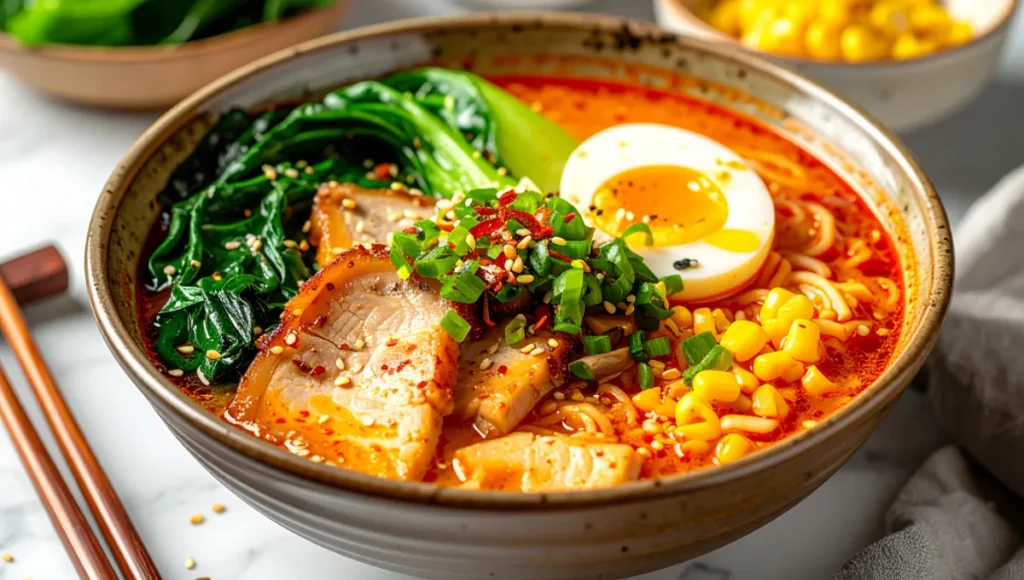
When my grandmother handed me her handwritten recipe book filled with Korean treasures, one dish stood out: 매운라면 (maeun ramyeon). This spicy ramen wasn’t just about eating; it was about family, tradition, and creating joy around the table. The bold flavors of chili and umami-rich broth were her signature touch, and now, I’m excited to share four tricks to elevate your ramen game, blending tradition with modern tips. Let’s dive in and create a dish that’s as comforting as it is exciting.
The Magic of Spice: Why Spicy Ramen Stands Out
Spicy ramen combines rich broth, chewy noodles, and a kick of heat that makes every bite unforgettable. But what makes it so addictive? The answer lies in the chemistry of spice. Capsaicin, the compound in chili peppers, triggers your heat receptors, releasing endorphins—a natural mood booster. This scientific reaction is why spicy foods feel both challenging and satisfying.
Globally, spicy ramen has transcended its roots, with Korean and Japanese varieties gaining popularity. Each culture adds its twist—Korean ramen, for instance, leans on gochujang (fermented chili paste) for a smoky sweetness, while Japanese versions often incorporate miso or soy for depth. Understanding these nuances will help you master the art of spicy ramen.
4 Simple Tricks to Ignite Flavor
1. Build a Bold Base with Quality Broth
Your broth sets the stage for every other element. A good broth is like the canvas of a painting—it provides structure, richness, and depth.
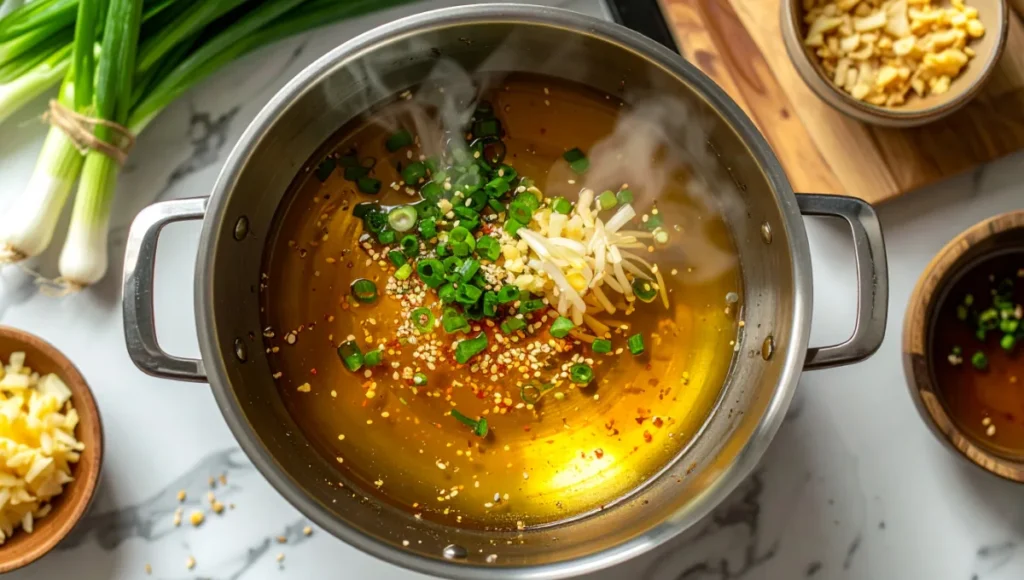
- Broth options to explore:
- Bone Broth: Perfect for a hearty, collagen-rich base.
- Miso Broth: Ideal for a savory, umami-packed flavor.
- Dashi: A light yet flavorful Japanese broth made from kombu (seaweed) and bonito flakes.
- Aromatic essentials: Minced garlic, grated ginger, and sliced scallions (white parts) are sautéed in sesame oil to release their natural oils, infusing the broth with warmth and complexity.
- Balancing act: To achieve harmony, blend savory soy sauce, a touch of rice vinegar for acidity, and a teaspoon of honey or brown sugar for sweetness.
Pro Tip: Let your broth simmer gently for at least 20 minutes. This ensures every ingredient’s essence melds into a cohesive and flavorful base.
2. Choose Your Heat: Spice Selection Matters
The key to an unforgettable spicy ramen lies in layering your heat. A single spice may be overwhelming, but a combination creates depth and complexity.
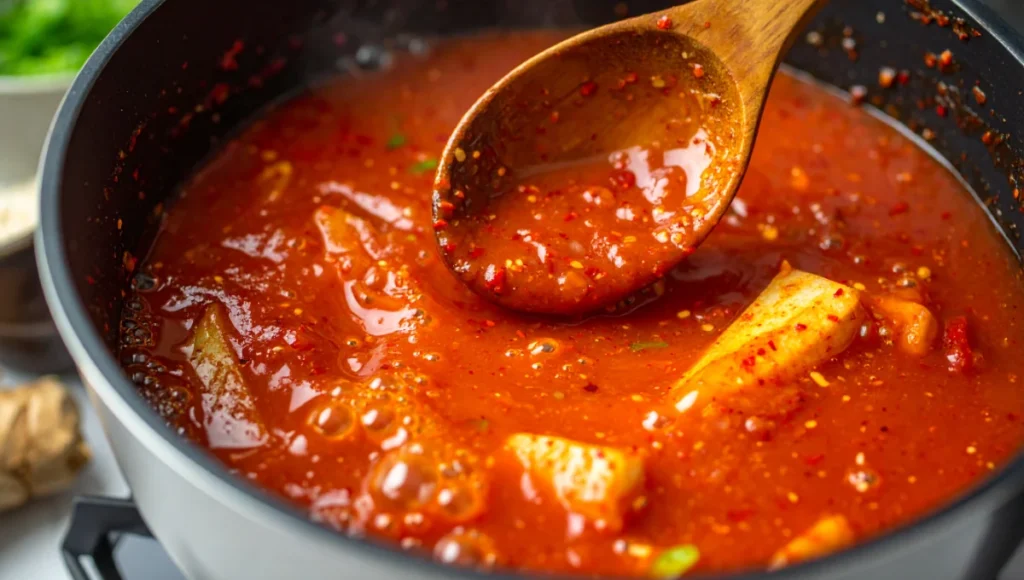
- Core spice options and their flavors:
- Gochujang: Smoky and slightly sweet, it’s a staple in Korean ramen.
- Chili Garlic Sauce: Adds tanginess alongside heat.
- Red Chili Flakes or Powder: Delivers a sharp, dry spice.
- Fresh Chilis: For an immediate, bright kick.
- Techniques to elevate spice:
- Toasting spices: Toasting chili flakes or powders before adding them to the broth enhances their aroma and flavor.
- Timing matters: Adding spices early intensifies their heat, while adding them later preserves freshness.
- Customizing the spice level: Adjust the heat to suit your tolerance by reducing chili or adding creamy ingredients like coconut milk to mellow it out.
Pro Tip: Don’t shy away from experimenting. A dollop of chili oil drizzled just before serving can add a final layer of smoky richness.
How to Balance Your Spicy Broth
| If it tastes… | It needs more… | Why it works |
| Flat/Boring | Soy Sauce or Miso | Adds “Umami” (savory depth). |
| Too Spicy | Sugar or Honey | Sweetness neutralizes the burn of capsaicin. |
| Too Heavy/Greasy | Rice Vinegar | Acidity cuts through the fat and brightens the bowl. |
| Too Thin | A dollop of Butter | Adds fat and body to the mouthfeel. |
3. Customize with Toppings and Proteins
Ramen toppings are where your creativity shines. They provide visual appeal, varied textures, and extra layers of flavor.
- Proteins to try:
- Soft-Boiled Eggs: Cooked to perfection with creamy, runny yolks. Marinate them in soy sauce for added depth.
- Grilled Pork Belly (Chashu): Smoky and tender, it pairs beautifully with spicy ramen.
- Silken Tofu: A vegetarian-friendly protein that adds creaminess.
- Vegetable additions:
- Bok Choy: Its tender leaves and crunchy stalks add freshness.
- Shiitake Mushrooms: Earthy and savory, they complement the broth’s richness.
- Corn or Bamboo Shoots: For a touch of sweetness or crunch.
- Finishing touches: Garnish your bowl with sliced green onions, toasted sesame seeds, or crispy garlic chips. For a traditional touch, add a sheet of nori (seaweed).
Pro Tip: The 6:30 Minute Rule. The hallmark of a great spicy ramen is the jammy, soft-boiled egg. To achieve this, drop cold large eggs into boiling water and set a timer for exactly 6 minutes and 30 seconds. Immediately transfer them to an ice bath for 5 minutes. This stops the cooking and ensures the yolk stays creamy—perfect for cutting through the intense heat of the broth.
4. Perfecting the Noodle-to-Broth Ratio
Noodles are the heart of ramen, and balancing their texture with the broth is key to a satisfying experience.
- Choosing the right noodles:
- Look for wheat-based ramen noodles with a firm, chewy texture.
- Gluten-free or low-carb options like shirataki noodles are great alternatives.
- Cooking tips for perfect noodles:
- Always cook noodles separately from the broth to avoid excess starch clouding the soup.
- Undercook the noodles slightly if you plan to reheat or let them sit in the broth for a while.
- Enhancing noodle texture: Toss drained noodles with a drizzle of sesame oil to keep them from sticking and to add a nutty flavor.
Pro Tip: Don’t overcrowd your bowl. A perfect ramen experience balances the noodles, broth, and toppings for every bite.
Recipe for Spicy Ramen
Ready to put these tips into action? Here’s a quick recipe to get you started:
Ingredients (Serves 2):
- 2 packs of ramen noodles
- 4 cups chicken or vegetable broth
- 2 tbsp gochujang (Korean chili paste)
- 1 tbsp soy sauce
- 1 tsp rice vinegar
- 2 tsp chili garlic sauce
- 2 cloves garlic, minced
- 1-inch piece of ginger, grated
- 2 green onions, chopped, keeping the white and green parts separate.
- 1 tbsp sesame oil
- Optional toppings: soft-boiled egg, grilled pork belly, bok choy, sesame seeds
Instructions:
- Warm sesame oil in a pot on medium heat. Sauté garlic, ginger, and the white parts of the green onions until fragrant.
- Add broth, gochujang, soy sauce, rice vinegar, and chili garlic sauce. Stir well and bring to a simmer. Let it cook for 15–20 minutes.
- While the broth simmers, cook the noodles separately according to package instructions. Drain and toss them with a little sesame oil.
- Divide the noodles into two bowls. Ladle the hot broth over the noodles.
- Add your favorite toppings and garnish with the green onion tops and sesame seeds.
FAQs About Spicy Ramen
Q1: Why do my noodles get soggy so fast?
Answer: This is usually due to “carry-over cooking.” Always rinse your noodles in cold water immediately after boiling to stop the cooking process and remove excess starch. Only combine them with the hot broth seconds before you are ready to eat.
Q2: What is the “Aroma Oil” trick?
Answer: Top-tier ramen shops always finish a bowl with a “Mayu” (Black Garlic Oil) or a simple Chili Oil. Since water-based broth and oil don’t mix, the oil floats on top, hitting your nose first. This provides an aromatic punch before you even take your first sip.
Q3: Can I use instant ramen noodles for this?
Answer: Yes! If you use the noodles from an instant pack, discard the flavor sachet (which is mostly salt) and use the broth recipe provided here. To make instant noodles taste more like fresh wheat noodles, add a teaspoon of baking soda to the boiling water; it gives them that classic alkaline “chew.”
Conclusion
Spicy ramen is more than just a meal; it’s a culinary journey that engages your senses and connects you to tradition. By mastering these four simple tricks, you can transform an everyday bowl of noodles into a restaurant-quality experience. So, why wait? Head to your kitchen, embrace the spice, and create a bowl of ramen that’s uniquely yours.
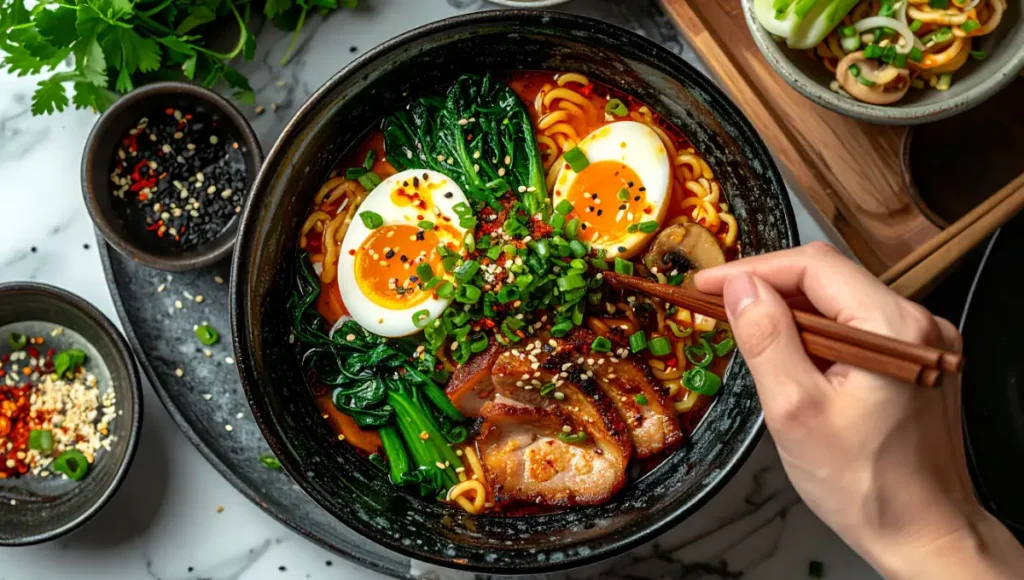
Don’t forget to share your spicy ramen creations! Tag us on social media or leave a comment below with your tips and variations. Your journey into the world of spicy ramen starts now!