
Table of Contents
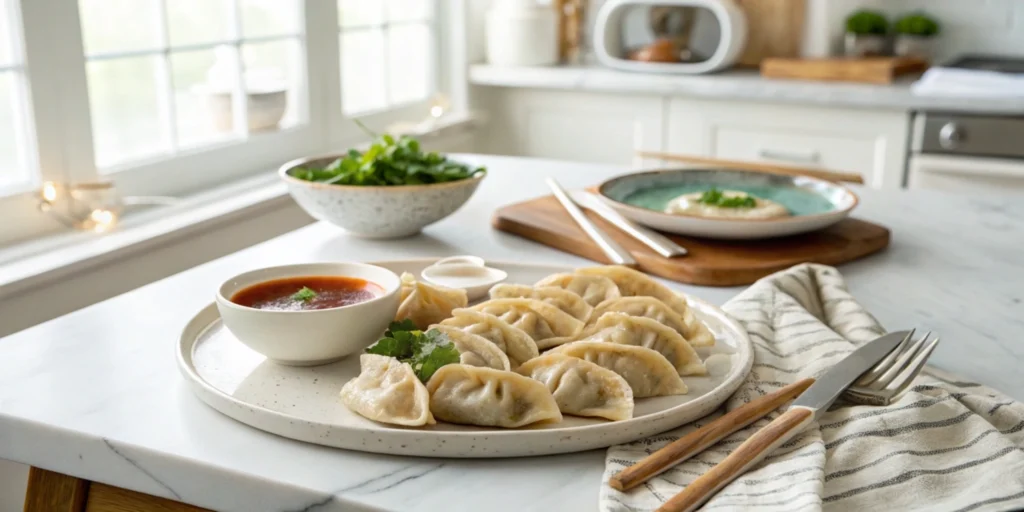
Mandu (만두), the Korean dumpling, is a culinary treasure that bridges generations and cultures. For those of Korean descent, like you, it’s not just a dish; it’s a link to family traditions and memories. As you embark on this journey to perfect your mandu, remember the stories from your grandmother’s handbook, where each recipe was a tapestry of flavors and techniques passed down with love.
Secret 1: The Perfect Dumpling Wrapper
Choosing the Right Wrapper
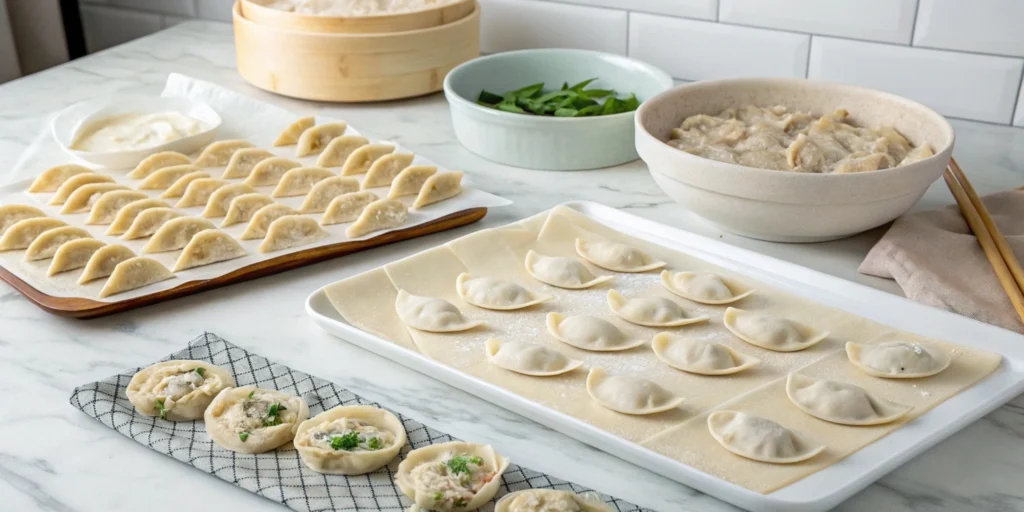
Your first step to mandu perfection is selecting the right wrapper. While making your own dough can add authenticity, store-bought wrappers are a convenient alternative that saves time without compromising too much on texture. If you’re opting for store-bought, look for wrappers labeled specifically for dumplings or potstickers. They should be slightly thicker than wonton wrappers, providing the ideal balance between chewiness and tenderness.
Making Your Own Dumpling Wrappers
If you decide to go the homemade route, you’ll need 2 cups of all-purpose flour, a pinch of salt, and about 3/4 cup of water. Start by mixing the flour and salt in a bowl, then gradually add water until a firm dough forms. Knead the dough on a floured surface for about 10 minutes until it becomes smooth and elastic. Let it rest for 30 minutes before rolling it out thinly and cutting into circles.
Secret 2: Balancing the Filling
Traditional Mandu Recipe Fillings
A well-balanced filling is crucial for delicious mandu. The classic combination includes 200g of ground pork, 200g of ground beef, 100g of tofu, 100g of finely chopped kimchi, 1/2 cup of garlic chives, and 2 minced garlic cloves. Season the mixture with 2 tablespoons of soy sauce and 1 tablespoon of sesame oil. The interplay of savory meats, tangy kimchi, and aromatic chives creates a filling that’s both hearty and flavorful.
Customizing Your Fillings
Feel free to get creative with your fillings. For a vegetarian twist, replace the meat with an additional 200g of tofu and add finely chopped mushrooms for a meaty texture. You can also experiment with different vegetables like carrots, cabbage, or zucchini, ensuring they are finely chopped and well-drained to avoid excess moisture.
Pro Tip: The Tofu Squeeze The #1 reason dumplings burst or become soggy is excess moisture. To prevent this, place your tofu in a clean kitchen towel or cheesecloth and squeeze it with all your might until it’s crumbly and dry. Do the same for your chopped kimchi! Removing this hidden water ensures your filling stays compact and the wrapper remains perfectly chewy.
Secret 3: Mastering the Folding Technique
Basic Folding Methods
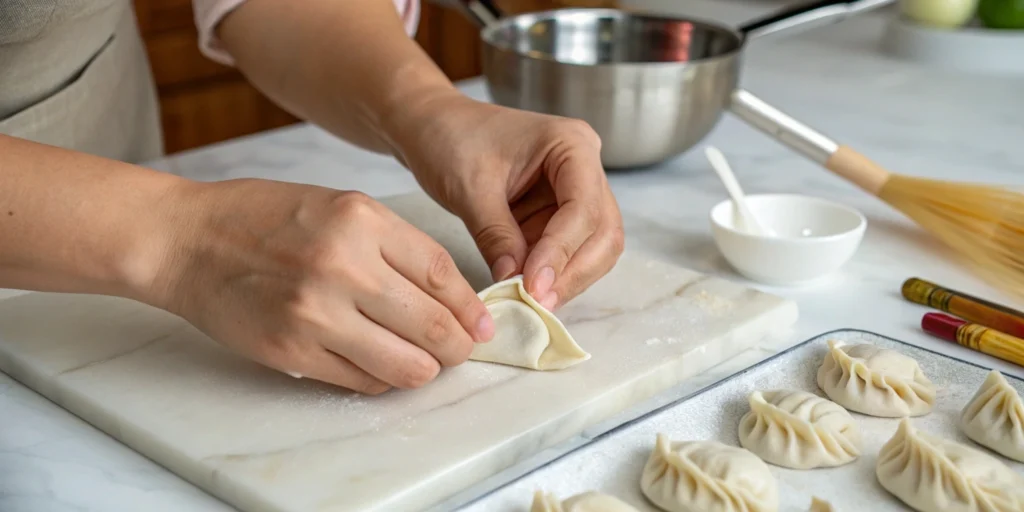
Folding mandu is an art that enhances both their appearance and cooking efficiency. The half-moon shape is the simplest and most common. Scoop a portion of filling into the middle of the wrapper, dampen the edges with water, fold it over to form a half-moon shape, and press the edges together to seal securely.
Tips for Sealing Dumplings
To prevent your mandu from bursting during cooking, ensure the edges are sealed tightly. You can create pleats along the edge for a more traditional look and a stronger seal. If you’re new to this, practice makes perfect, so don’t be discouraged if your first few attempts aren’t perfect.
Secret 4: Cooking Methods
Steaming Korean Dumplings
Steaming is one of the healthiest ways to cook mandu, preserving the delicate flavors of the filling. Arrange the dumplings in a steamer that has been lined with cabbage leaves or parchment paper to avoid sticking. Steam them for 10-12 minutes until the wrappers turn translucent and the filling is fully cooked.
Pan-Frying Korean Dumplings
For those who enjoy a bit of crunch, pan-frying is the way to go. Heat a tablespoon of oil in a non-stick pan over medium heat. Arrange the mandu in the pan, ensuring they don’t touch. Fry until the bottoms are golden brown, then add a splash of water, cover, and steam for 3-4 minutes.
Boiling Korean Dumplings
Boiling is another popular method, especially for soups like mandu-guk. Drop the dumplings into boiling water and cook until they float, plus an additional 2-3 minutes to ensure they’re fully cooked. Use a slotted spoon to remove them gently.
Which Cooking Method Should You Choose?
| Method | Texture | Best For… |
| Steaming | Silky & Tender | Showing off intricate pleats and delicate flavors. |
| Pan-Frying | “Kko-chi” (Crispy & Juicy) | A satisfying crunch; perfect as a snack or appetizer. |
| Boiling | Soft & Velvety | Mandu-guk (Soup) or a quick, hearty meal. |
| Air Frying | Fully Crunchy | A modern, low-oil alternative to deep frying. |
Secret 5: The Perfect Dipping Sauce
Traditional Soy-Vinegar Sauce
No mandu experience is complete without a dipping sauce. The traditional soy-vinegar blend is simple yet effective. Mix 2 tablespoons of soy sauce with 1 tablespoon of vinegar, a dash of sesame oil, and a sprinkle of red pepper flakes for a kick. This sauce perfectly complements the savory filling of the mandu.
Creative Dipping Sauces
For a twist, try a spicy gochujang-based sauce. Mix 1 tablespoon of gochujang, 1 tablespoon of soy sauce, 1 teaspoon of sesame oil, and a teaspoon of honey for a sweet and spicy dip that adds a new dimension to your mandu.
FAQ Section
Q1: Do I need to defrost mandu before cooking?
Answer: No! In fact, it’s better not to defrost them. Cooking mandu directly from frozen prevents the wrappers from becoming gummy or sticking to your hands. Simply add 2–3 minutes to the steaming or boiling time.
Q2: Why do my wrappers keep tearing when I fold them?
Answer: This usually happens if the wrappers have dried out. Keep your stack of wrappers under a damp paper towel while you work. If the edges are too dry to seal, use a “glue” made of a little water or a beaten egg to ensure a landslide-proof seal.
Q3: How do I get that “restaurant-style” lacy crust when pan-frying?
Answer: Use the “slurry” method! Instead of just adding water to the pan to steam, mix 1 teaspoon of flour with 1/4 cup of water. Pour this into the pan, cover, and cook. Once the water evaporates, it leaves behind a beautiful, crispy “lace” connecting your dumplings.
Conclusion: Your Path to Mandu Mastery
By mastering these five secrets, you’ll transform your mandu from simple dumplings into culinary masterpieces. With practice, your skills will grow, and soon you’ll be sharing these delightful parcels with friends and family, just like your grandmother did. Embrace the journey and let each batch of mandu be a step closer to perfection.